

𝑨𝒏𝒐𝒕𝒉𝒆𝒓 𝑷𝒓𝒊𝒅𝒆 𝒂𝒏𝒅 𝑷𝒓𝒆𝒋𝒖𝒅𝒊𝒄𝒆 𝒂𝒅𝒂𝒑𝒕𝒂𝒕𝒊𝒐𝒏? 𝑰𝒇 𝒚𝒐𝒖 𝒅𝒐𝒏’𝒕 𝒓𝒆𝒂𝒅 𝒉𝒆𝒓, 𝒚𝒐𝒖 𝒎𝒊𝒔𝒔 𝑱𝒂𝒏𝒆 𝑨𝒖𝒔𝒕𝒆𝒏'𝒔 𝒈𝒆𝒏𝒊𝒖𝒔
Grouchly Boxing Day moaning, friends. I greet you well.
Boxing Day is observed around the Anglo world, other than the USA (with the exception of Massachusetts, though it is not an employee holiday there). The origin of the day is a matter of dispute. It's not a religious holiday - though it is also St. Stephen's Day. And nobody ever says "Happy Boxing Day".
In the 20th century the Boxing Day Sales were synonymous with the day. With Christmas dinner barely digested, tens of thousands of housewives would camp overnight outside the shops and stores, which offered genuine pennies-for-pounds bargains. But you had to get there early if you had your eye on something in particular - hence the encampments that grew along British High Streets late on Christmas Day. For many that was part of Christmas - to dress up warm, load up on turkey sandwiches, Christmas cake and a good supply of booze, holding festive sing-songs with new-made friends huddled around hurricane lamps during the freezing cold night. Grabbing a bargain seemed almost incidental to a lot of them.
Such scenes are largely absent today. In the 1970s, with (I hate to say it) the wholesale American take-over of British stores, came the Sale That Wasn't A Sale - the practice of hiking up prices for one or two days before Christmas, reducing them to normal on Boxing Day, and presenting that as a "sale". Well, you can't fool bargain-hunting shoppers that easily, particularly not the British housewife, more used than her American counterpart to making the pennies stretch, and by the 1980s all those encampments had disappeared.
"Sales" take place all the year round now, and they're no more sales than I am a pink marmoset. Retail law is now got round by hiking prices in a store located in some God-forsaken part of the country for a statutory three days, then reducing them back to the regular price, and affixing "Sale!" signs in the rest of that company's stores to items that aren't a penny cheaper than they were the day before. In the UK Amazon does a variation on that nasty little trick.
What's all this got to do with Jane Austen?
Bugger all. Not a sausage. I'm sure Jane never camped outside Woollies on a Christmas night, hoping to snag a cheap boddice or two.
I'm much in agreement with the tenor of this piece from today's Times. Jane must be read to be appreciated. All those films and TV adaptations are obliged to "soup her up" to attract audiences, usually to the point where you're left asking - is this really Jane?
Her prose, authentically the syntax and speech of the provincial gentry of late Georgian England (and to some extent early independent America). It's a delight to eye and brain. You don't read Jane. You listen. You absorb. You meander with her as she gently takes you through her stories.
She's quite unlike Dickens, still less like Thackeray. She was old hat even in their day, her writing style hopelessly old-fashioned - but a towering, influential figure just the same.
These days established writers like to mock those who take the "vanity" publishing route (Amazon has a whole business model based on it), while those who self-publish complain that in the Anglo world publishing long ago fell into the hands of a small coterie of liberal-left folk who push navel-gazing tales of little interest beyond their own charmed circle (a "best seller" in England might only sell a few hundred hard-copies and a few thousand paperbacks).
But Jane self-published all her works. She had little choice, and not - as the feminists like to claim - because she was a woman, but because that was how you got your work into print in her day. Mark Twain, Beatrix Potter, Walt Whitman, even - essentially - the Brontës all self-published - and made greater names for themselves with greater works than anything achieved by the self-regarding literati of North London or New York.
This from today's The Times:
===============================
𝑰 𝒍𝒐𝒗𝒆 𝑱𝒂𝒏𝒆 𝑨𝒖𝒔𝒕𝒆𝒏 — 𝒃𝒖𝒕 𝒏𝒐𝒕 𝒘𝒉𝒆𝒏 𝒔𝒉𝒆’𝒔 𝒐𝒏 𝑻𝑽
by Emma Duncan
Others get worked up about trans rights or AI, but for me it’s Jane Austen celebrations. I was going to keep my trap shut about it but I failed. It was hearing that there are new star-studded Pride and Prejudice and Sense and Sensibility TV adaptations on their way that triggered me. How do we celebrate our greatest author’s 250th birthday? Not by reading her books but by making TV programmes about her.
Last time round, at the 200th anniversary of her death (TV programme commissioners must rejoice at the frequency of these celebrations), the only worthwhile TV spin-off I remember was I Hate Jane Austen, starring Giles Coren.
Giles interviewed eloquent Austen academics enthusing about Austen while pretending to be a laddish journalist who thought the books were, like, totally lame. In the classic redemption plot, his earnest interlocutors turned him into an eloquent enthusiast. Thus Giles revealed the film’s didactic purpose — to persuade people to read Austen’s books — and the fact that he is a secret swot.
It was nicely done; but the fact that people need to be persuaded to read novels is pretty startling. Novel-reading used to be regarded as a frivolous habit that would weaken the minds of young women. One of George Eliot’s female characters is regularly told off for it, and you don’t have to go back that far. When I first went to boarding school we weren’t allowed novels in the dorm. (Understandable, perhaps, given that we were mostly reading soft porn disguised as historical fiction.)
Nobody these days tries to deprive girls of novels because reading any sort of book is regarded as rather highbrow. The normal way of consuming Austen is through television or movies. I don’t have anything against TV adaptations in themselves. I like a pretty frock, a finely turned calf and a Georgian country house as much as the next woman. But it’s daft to pretend that the TV adaptations can convey Austen’s greatness.
TV is mostly about plot and dialogue, and though Austen’s plots are beautifully constructed, they are not the stuff of good TV. Aside from the odd sprained ankle or tumble from a sea wall, nothing much happens. People’s feelings for each other change gradually. That’s it. If you want a rattling good plot, Charles Dickens or Anthony Trollope are your men. Austen is short of spontaneous combustion and suicidal fraudsters.
Dialogue is a bigger part of the point of Austen, but conversation in her books happens at a slower pace, and the wit in it relies on more complex sentence structure than modern viewers will put up with. So even in the best adaptations, such as Emma Thompson’s Sense and Sensibility, the dialogue contains only snippets of hers.
But the most important thing that the adaptations lack is Austen herself. The brilliance of her books consists in the lines that nobody says but the author whispers into your ear. That’s where you discover that the light entertainment in which flirtatious couples dance around a cast of comic characters towards marital happiness is actually beribboned cover for harsh satire on a society whose values the author despised.
Not that Austen ever says so directly. Her insults are graceful and her criticism is veiled. “Lady Middleton was more agreeable than her mother, only in being more silent.” “With a reward for her tears, the child was too wise to cease crying.” Her position is that of a maiden aunt at a party, paid little attention by others but herself paying close attention to them, with a half-smile disguising both her loneliness and her darker thoughts.
Austen lays it on delicately, for she does not want to offend those around her. They are, after all, her society and her readers as well as her material.
That’s why, as Virginia Woolf put it, “of all great writers she is the most difficult to catch in the act of greatness”. Her personality flickers lightly through her prose. Less artful authors make the characters of whom they disapprove into villains; she turns them into figures of fun.
Mrs Bennet, a fool and a crashing snob who is a bad influence on her daughters and a life sentence to her husband, is a comic masterpiece. Mr Collins, the hypocritical, vain, self-centred clergyman who fancies himself as a fine match for Elizabeth Bennet, is a laughable twit.
And so they are played in the TV dramas, which cannot convey Austen’s voice, nor catch the tone of “intense moral preoccupation” which FR Leavis identified as her genius. It is always there in the books, hand in hand with her need for society and companionship.
Most of her characters are weak, snobbish, vain, greedy or some combination of all of those, yet the reader remains on civil terms with most of them — just as Elizabeth Bennet remains friends with Charlotte Lucas, even after the latter betrays true feeling in the interests of social status and marries the awful Collins.
All of this is lost in the TV adaptations and films. Austen’s voice is there only in the books, which is why the decline in reading fills me with dread. Words are the subtlest means we have of expressing how the complicated business of getting on with each other feels to us and they are the strongest bond we have with those in our past who have expressed it best. If we lose that, we lose the thread of our civilisation.
So if I’m inclined to go off on one about the decline in our literary culture, rather than on matters of trans rights or AI, it’s not because I’m frivolous, it’s because I fear the trouble our culture is in is serious.

Got a great deal at HALF PRICE MEMES. Their after Christmas blow out sale still had a great selection.
Yo ho ho and a bucket of chum



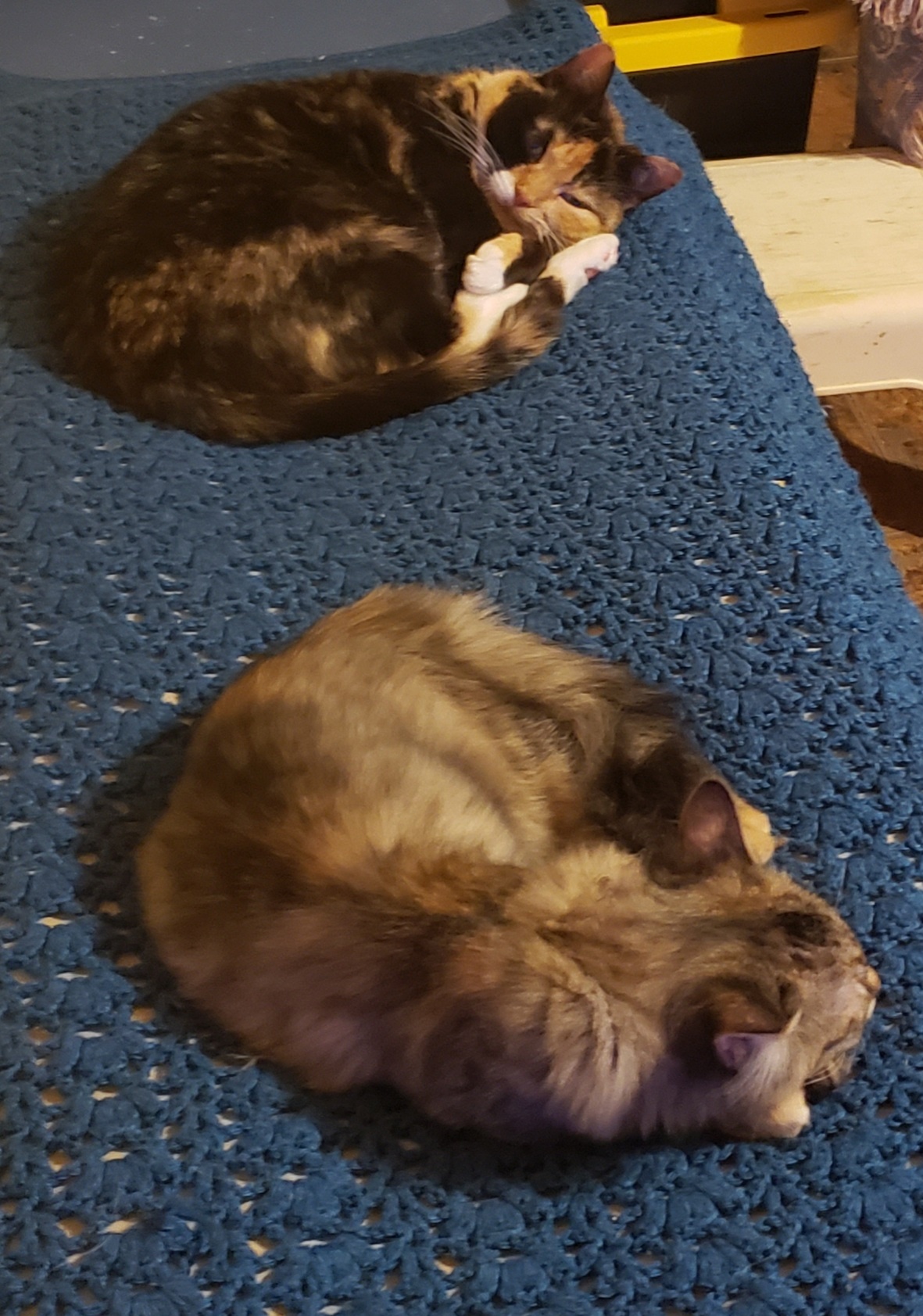
Good morning! My Christmas presents were the health upswing of my fur kids.
Kat continues to improve daily. She's gained back at least 5-7 pounds already.
I'll weigh her next week after a poop recheck.
Chatham's eye has completely healed. As I continue to watch Chatham and Martha play, I think perhaps the original injury might have been an unintentional Martha claw.
It's kind of crazy, but all my cats love Martha, even my almost 15-year-old Shadow.
I'm blessed.