
Some trivia -
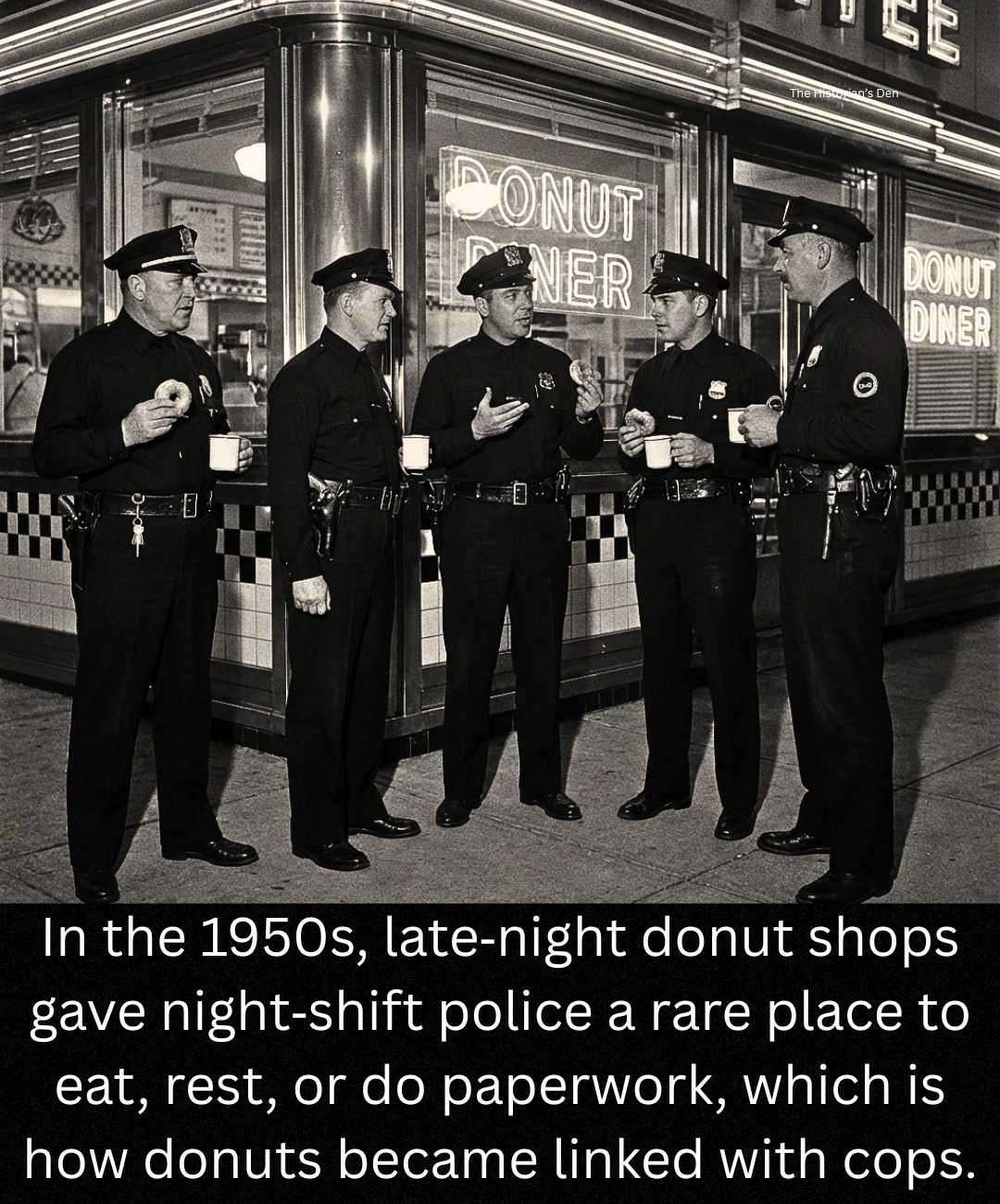
Donut shops didn’t become cultural shorthand for police officers by accident. In the 1950s, most American cities had very few food businesses open past midnight. Diners often closed early, and fast‑food chains hadn’t yet taken over the landscape. Donut shops, however, needed to bake through the night so fresh pastries would be ready by morning. That meant their lights were on, the coffee was hot, and the doors were open when almost everything else was dark.
At the same time, police departments were expanding night‑shift patrols. Officers working those long, quiet hours needed somewhere safe, well‑lit, and predictable to take a break, write reports, or grab a quick snack. Donut shops fit the bill perfectly: they were inexpensive, welcoming, and, crucially, reliable. An officer could count on finding one open at 2 a.m. when every other storefront was shuttered.
Over time, this practical overlap turned into a cultural association. The sight of a patrol car parked outside a donut shop became common enough that it evolved into a running joke, then a stereotype. But beneath the humor is a simple bit of history: late‑night bakeries were among the only places offering warmth, caffeine, and a moment of rest to people working one of the toughest shifts in the city.
The Historian's Den
Donut shops weren’t just convenient, they were considered safe. In the mid‑20th century, many neighborhoods had limited late‑night lighting and higher rates of petty crime after dark. A brightly lit bakery with people coming and going offered officers a predictable, low‑risk place to pause without isolating themselves in an empty street or alley.
Some shop owners even welcomed police presence because it deterred break‑ins, creating a mutually beneficial relationship that helped cement the routine.
Another lesser‑known angle is the economics behind it. Donut shops often gave discounts or free refills to officers, not as bribery but because police visibility reassured customers and reduced the chance of overnight theft.
Meanwhile, officers appreciated the steady supply of caffeine and sugar during long, quiet hours when fatigue hit hardest. Over time, these small practicalities, light, warmth, safety, cheap coffee wove together into a cultural shorthand that stuck far longer than anyone in the 1950s probably expected.


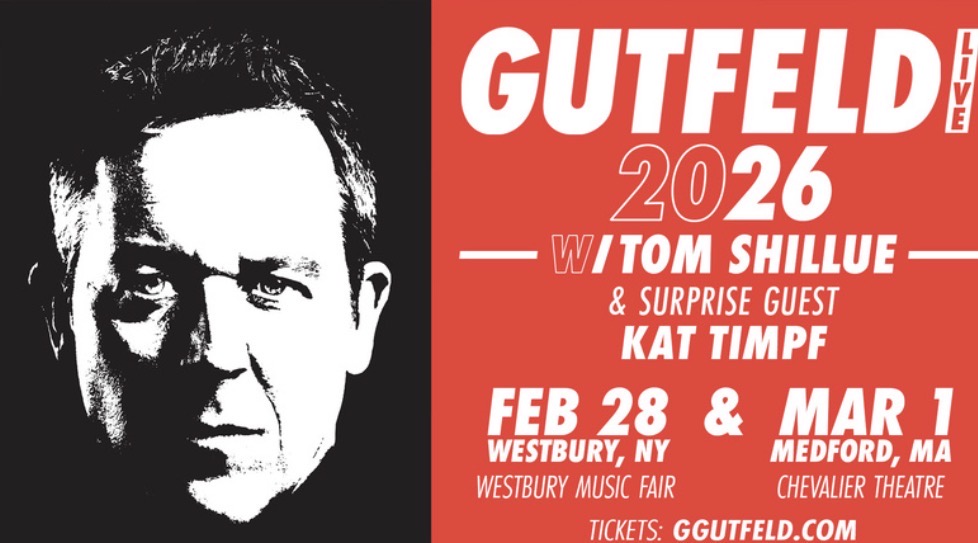
Reply NOW Westbury and Medford February Show Attendees!
Let us know in the comments if you are attending the Westbury February 28 show or the March 1 Medford show. We have a surprise exclusive for ACTIVE SUPPORTERS. Simply reply to the post if you're attending. Please keep an eye out for an email from a Gutter Team Member once we receive your response.
MUST reply by January 31 to receive your exclusive supporter gift. No exceptions unfortunately.