

This is interesting - from The Untold Past FB page:
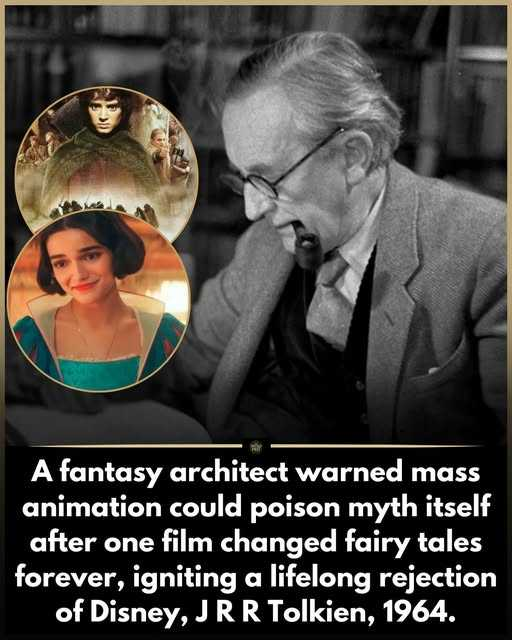
J R R Tolkien’s dislike of Disney was not casual, and it did not come from jealousy or trend resistance.
It began in 1937. That year, Tolkien published The Hobbit, a carefully constructed myth shaped by language, history, and moral weight. Just months later, Disney released Snow White and the Seven Dwarfs, the first animated feature film of its kind. The timing unsettled him.
Tolkien watched the film with his close friend C S Lewis. Neither was impressed.
What Tolkien saw was not technical failure. He recognized Disney’s talent immediately. What disturbed him was intent. Fairy tales, in Tolkien’s view, were not decorative entertainment. They were ancient tools meant to confront fear, loss, danger, and moral consequence. Disney’s approach transformed those elements into sentiment, humor, and spectacle designed for universal consumption.
That transformation felt like corruption to him.
In a letter written in 1964, Tolkien stated plainly that Disney’s talent seemed hopelessly corrupted. He believed that any story Disney touched risked being flattened into something moral but shallow, visually rich but spiritually thin. Clear villains replaced moral ambiguity. Dark edges became soft conclusions. Myth was reduced to amusement.
This was not personal hatred. It was philosophical opposition.
Disney believed stories reached their highest purpose when simplified for mass audiences. Tolkien believed stories gained power only when they retained shadows, complexity, and danger. One tried to modernize myth. The other tried to protect it from modernity.
This belief shaped Tolkien’s resistance to film adaptation throughout his life. He feared that cinematic convenience would erase the depth he had built word by word.
For Tolkien, mythology was not meant to be improved. It was meant to be preserved.
When stories lose their darkness, do they still deserve to be called myth.