

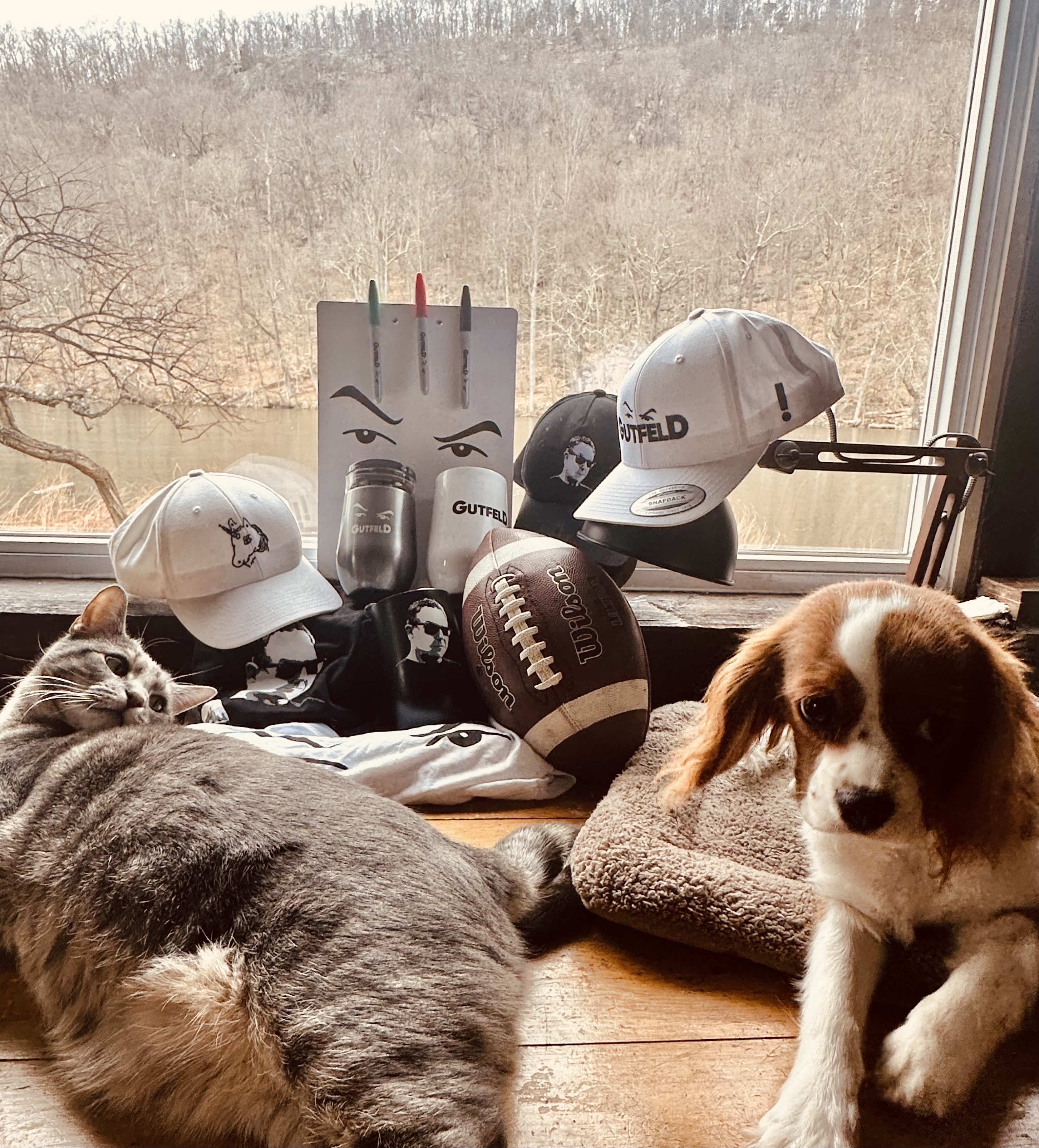
Grand Prize - Cap of your choice and Gutfeld Sharpie Collection…
1. First person to post on THIS Thread once the GUTFELD! Ad starts running
2. Make a prediction on who will win and include a score.
3. Include a photo of the Ad running on whichever device you are using (phone iPad TV, video wall bar etc..
4. Contest ends at the official end of the Super Bowl.
The first post after the ad starts running with the correct Super Bowl winner - wins and runner up will be the first winner w/correct score… you can enter more than once:
Good luck and have an engaging, fun and safe Sunday!
Sincerely Team Gutter, Gutfeld & Gus!!
For those who keep asking where all the fun merch is… you can find it here. We’ve also just marked some holiday items down.
https://www.theconnextion.com/greggutfeld/index.cfm

Send help......and a storage unit. He kept the m'fer a secret. Maybe I should come home with a pair of $1000 shoes.
Congratulation to @SGKusmertz, @bek1, and @wilbner. Your questions were chosen for tonight’s Ask Joe and the Panelists.
@SGKusmertz If you could have one song play when you enter a room, what would it be?
@bek1 Do you usually feel excited or stressed out about going back to school after summer break?
@wilbner What was the best prank you’ve ever pulled?